Real problems, real solutions.
Here's a look at some of the work we've done recently. Client details are anonymised, but the problems, systems, and results are all real.
Single platform replacing five disconnected systems
The Challenge
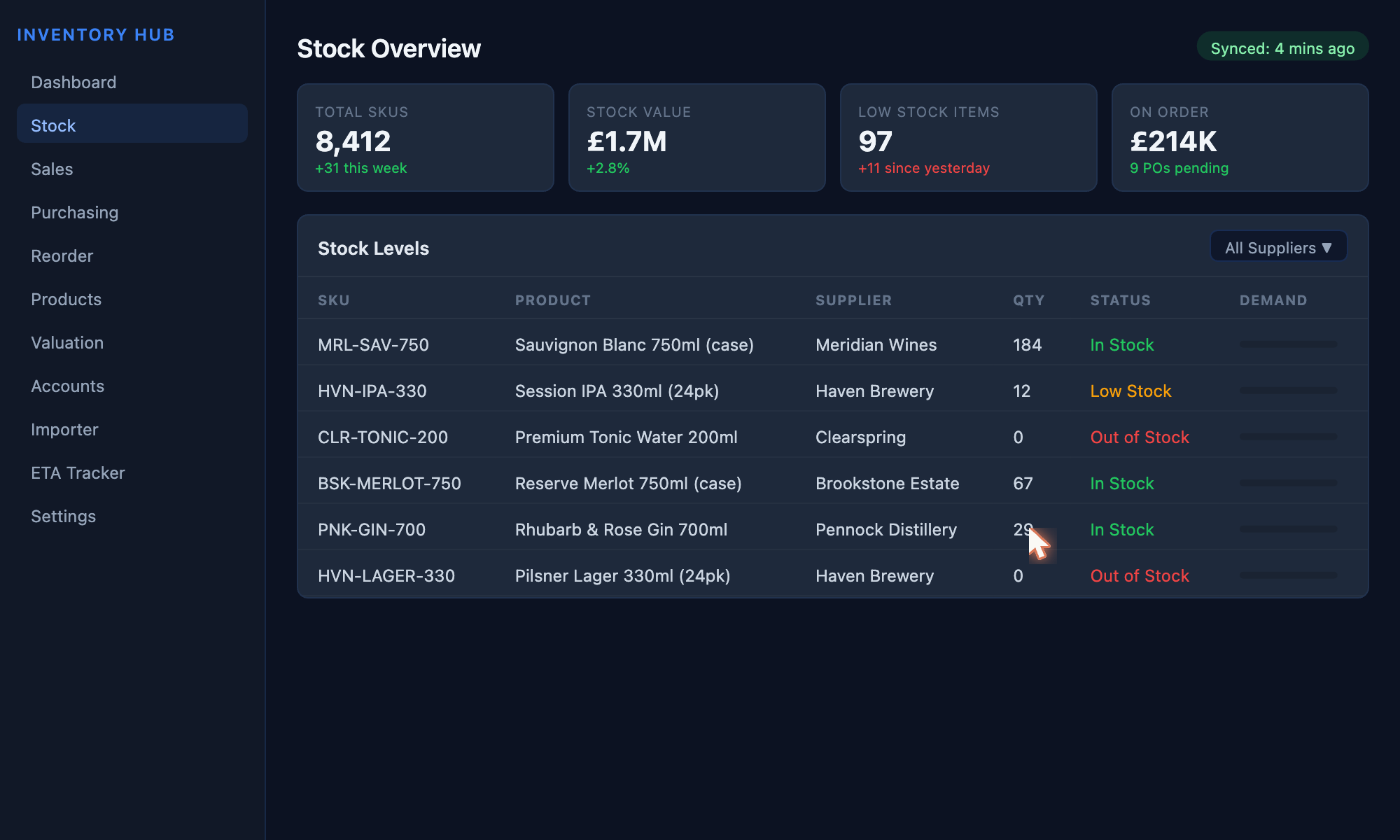
A UK distribution company was running operations across five separate systems — orders in one platform, accounting in another, stock levels in spreadsheets, purchasing decisions made on gut feel, and product data scattered across shared drives. Nobody had a single view of the business.
What We Built
We built a unified internal platform with 10+ modules covering stock management, sales analytics, purchasing, reorder workflows, product management, pricing, and CRM — all behind a single login. A proxy layer connects to multiple databases, while scheduled jobs sync data from the existing order management system every night.
Results
Replacing Linnworks’ blind reorder with a demand-driven engine
The Challenge
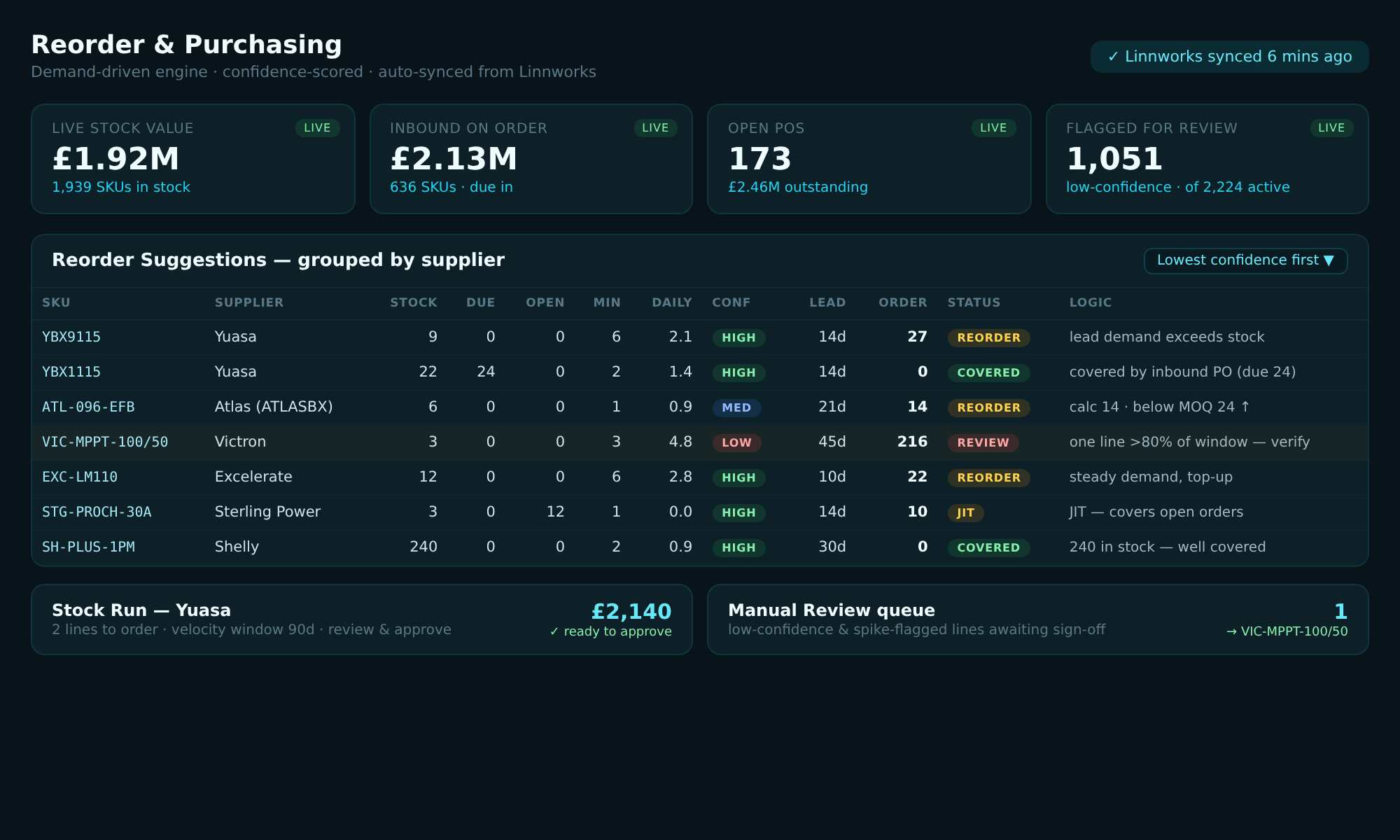
Linnworks is a capable order and warehouse system, but as a re-order tool it leans on static, hand-typed min/max levels. For a 10,000-SKU battery distributor that meant overstock and stockouts at the same time — it reorders against on-hand (ignoring stock already on a live PO), treats one big trade order as steady demand, and never rounds to supplier minimums. Every suggestion a black box nobody could trust.
What We Built
We built a demand-driven reorder engine on top of the live Linnworks data. A two-formula model (just-in-time vs forecast-driven) counts stock already on order, sizes against per-supplier lead times and order cycles, and scores every line for confidence — so lumpy, spiky demand is flagged for a human instead of silently over-ordered. Cost and margin run off a best-available-cost priority chain, and the whole thing stays read-only: Linnworks remains the system of record.
Linnworks reorder
Results
From zero customer visibility to automated account health scoring
The Challenge
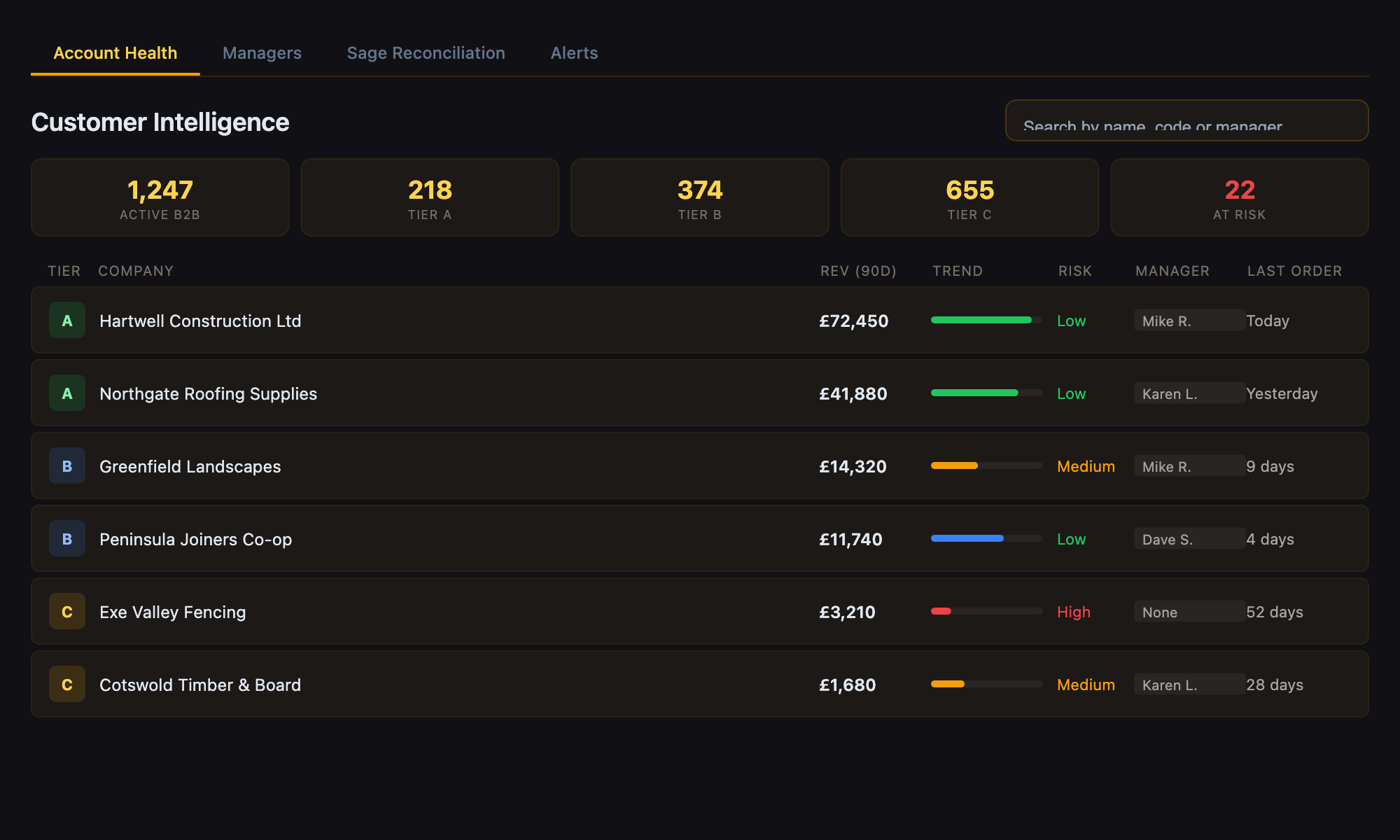
A distribution company's sales team had no way to see which accounts were growing, declining, or about to churn. Customer data was fragmented into thousands of duplicate records due to a name-matching bug that had been silently dropping every matched order for months.
What We Built
We built an account health engine computing rolling revenue windows (7/30/90/365 day), value tiers (A/B/C), churn risk scores, and channel mix. Fixed a critical data bug, cleaned thousands of duplicates, and added account manager assignment with automated reconciliation.
The old way
Results
Closing a £605K gap between two inventory systems
The Challenge
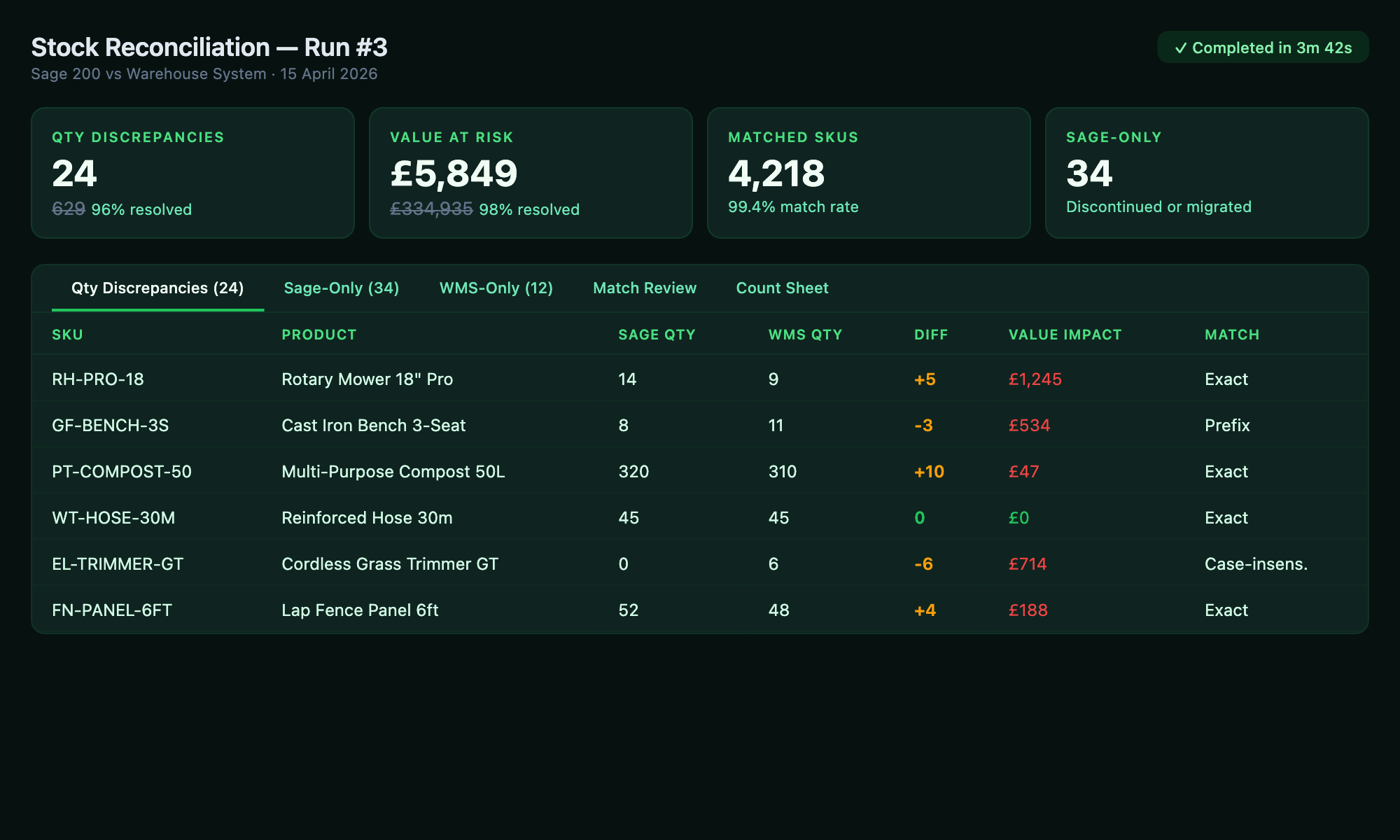
A distribution company discovered a £605,000 valuation gap between their accounting system and warehouse platform. Different costing methods, quantity mismatches on 629 SKUs, and truncation issues meant nobody could trust either number.
What We Built
We built an automated reconciliation engine with multi-tier SKU matching (exact, case-insensitive, prefix, whitespace-normalised) that handles the quirks of both systems. Outputs multi-tab workbooks with discrepancies ranked by value impact.
Results
Digital trade account applications replacing email chaos
The Challenge
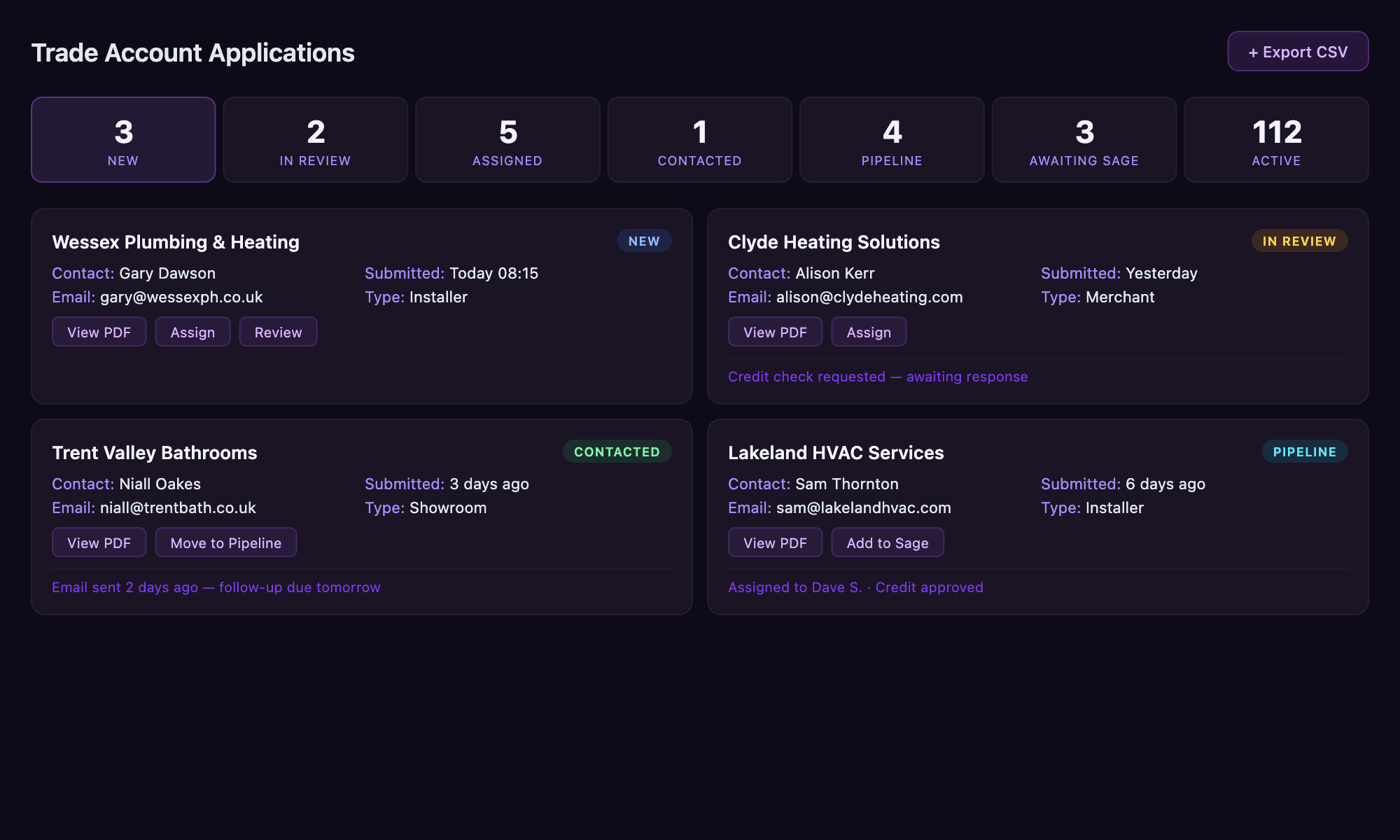
New B2B customers applied for trade accounts via email — no tracking, no workflow, no audit trail. A silent bug in the original form meant submissions could show "success" to the customer while never reaching any backend.
What We Built
We built an end-to-end digital workflow: a multi-step application form generating signed PDFs client-side, posting to a database with email confirmations. An admin dashboard with role-based access tracks every application through a defined status pipeline with full audit logging.
The old way
Results
Warranty and returns system with customer self-service tracking
The Challenge
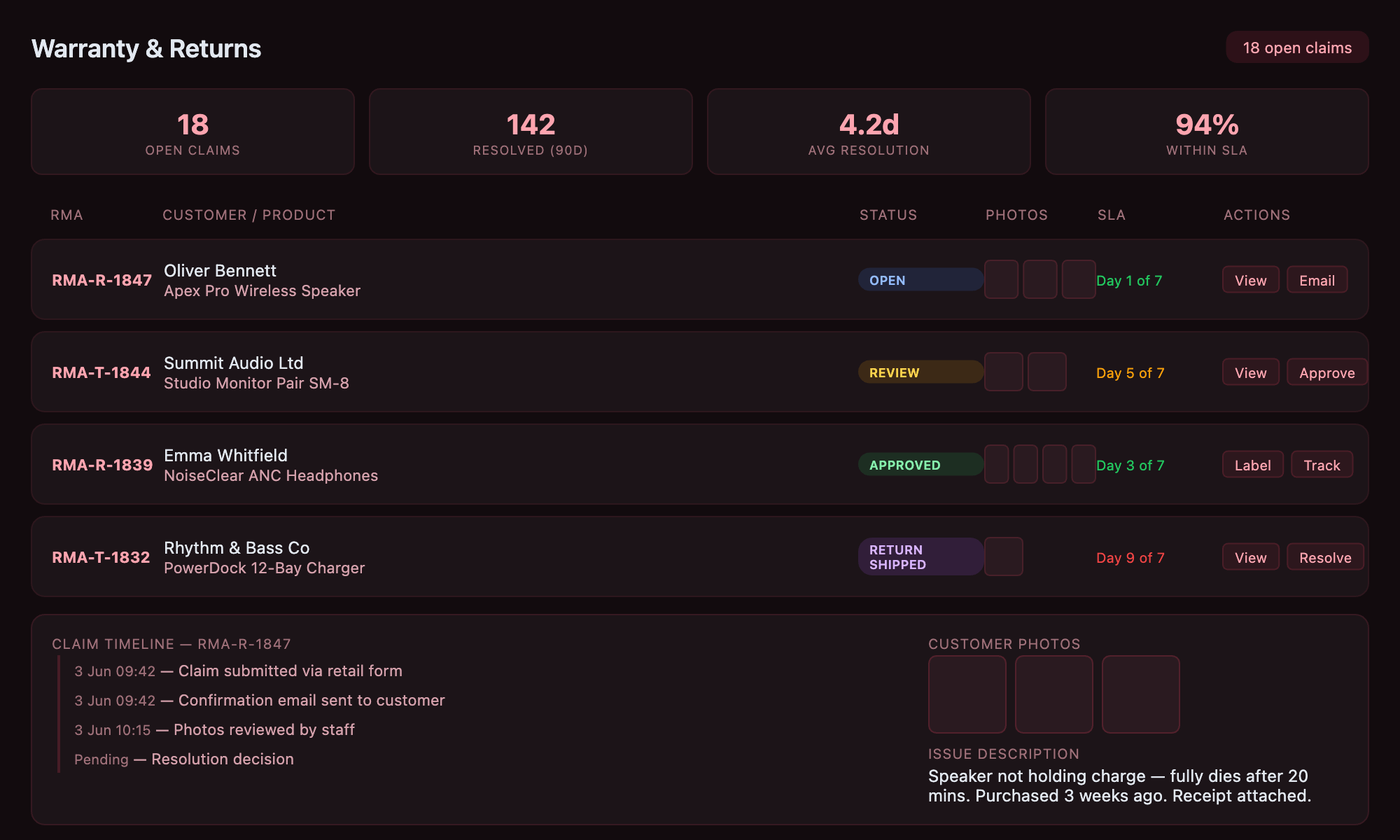
Warranty claims were handled entirely by email — no structured process, no SLA tracking, no way for customers to check claim status. The team was losing track of claims and missing deadlines.
What We Built
We built a complete warranty management system: separate trade and retail claim forms with photo uploads, a staff dashboard with editable email templates and SLA tracking, customer-facing tracking pages with direct URL links, and printable return labels.
Results
Enterprise-grade security built into every system
The Challenge
Every system we build handles sensitive business data — customer records, financial information, supplier pricing, and internal operations. SMEs often lack the resources to implement proper security, leaving API keys exposed, access controls missing, and no audit trails.
What We Built
Security is built into every project from day one, not bolted on afterwards. We implement role-based access control with row-level security at the database layer, encrypted API key management via environment variables and service accounts, JWT authentication with signed tokens, time-limited signed URLs for sensitive documents, full audit logging on every state change, and triple-retry submission patterns with explicit failure handling to prevent silent data loss.
Results
Got a similar problem? Let's talk about it.
Book a free discovery call